


From Nigeria to Italy: The Story of Female Victims of Human Trafficking
By Kiera Eriksen-McAuliffe
Human Trafficking:
Gender, Race and Exploitation
March 13th, 2018 | 6:00 PM | Villa Sassetti
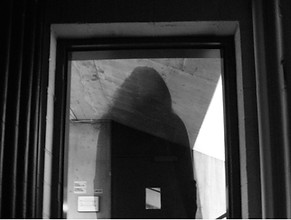
Human Trafficking is "a new form of modern slavery" according to the United Nations. The trafficking in women forced into sexual labor is a significant component of this phenomenon. NYU Florence's Debora Spini will moderate a discussion with Silvia Scarpa, an expert on contemporary slavery and human trafficking, and Pietro Vené, a social worker who oversees a shelter for minor victims of human trafficking in Florence, to shed light on this problem in the Italian context.

Video by Sofia Vorontsova
Blessing was like many women in Nigeria, unhappy with her conditions and hoping for a savior. When that savior came, she trusted her unconditionally. She was promised a better life in Italy for the small price of paying off the debt incurred by getting her there. Upon traveling through Libya she was kidnapped, and her “madame” - a term used to describe the trafficker handling victims on their journey - paid her ransom, further strengthening this trust. When she arrived in Sicily by boat she was told about human trafficking, but did not yet associate herself with the issue.
In Italy, Blessing’s companion welcomed her into her home, provided her food, introduced her to a Nigerian church community, and gave her a cell phone for calling her family members. Things quickly changed, however, when after about three days her madame told her that it was time to start working and brought her to the streets where she was meant to sell herself. Blessing endured this for about three months, while planning her escape. She had a client take her to a bus station where she boarded a bus to a random location. She switched her phone’s SIM card with one that she had secretly purchased, and called the International Organization for Migration (IOM), which offers resources and protections for victims of human trafficking, from the station upon arrival.

Photo from "Pipeline" by Elena Perlino
Blessing’s story is, unfortunately, not unique. According to the International Organization for Migration, the UN world dataset identifies 46,000 registered cases of human trafficking involving individuals from over 140 nationalities in 150 destination countries, and these are only those that were registered. Nigerians are a major part of this group, making up about 59% of assisted victims. The main ports of entry for Nigerian victims of human trafficking are all in southern Italy. (IOM 2017)
In 2016, 27,219 Nigerian migrants arrived in Italy, and of these, 7,500 were women. It is estimated that about 80% of these female migrants were trafficked for the purpose of sexual exploitation. (Global Slavery Index 2018). These figures are alarming, and unfortunately growing. The stories of these women are quite similar, and this type of trafficking tends to happen in a specific way.
First, the women are recruited by someone in Nigeria. This can happen in a variety of ways. One woman tells the story of how she was working as a hairdresser when a lady came in and told her that she was extremely talented, and could become very successful in Italy. Another girl tells the story of a man who told her that he was in love with her and wanted to take her with him to Europe. The common thread in these stories is the promise of a better life. Many of these women come from difficult conditions, and so this promise serves as the glimmer of hope that they have been seeking.

The second step is the journey to Italy. They are often transported North through Nigeria, Niger, and then Libya. Once they reach the coast, they will often wait in ghettos- typically an abandoned building- before boarding an inflatable boat. Conditions on the journey can be incredibly difficult, and many women face assault and other abuses on their way.
Upon arrival in Italy, migrants are screened and often placed in reception centers, or are taken directly to the houses of their madams. If placed in a reception center, they may be picked up by another member of the trafficking ring. It is often at this point that they are told about the amount of debt they have incurred and what they are expected to do to work it off. In some cases, if they refuse, they are beaten until they comply, as in the case of Princess, a single mother of three who arrived via plane to Turin, hoping to work in a restaurant (as she had been told she would). (Kelly 2016)
Deceit on the part of the trafficker is often at the origin of the journey, and this is a particular problem when it comes to underage girls. In recent years, there has been an increase in the trafficking of unaccompanied minors. In these cases, minors are often instructed by traffickers to declare themselves as older than they are so that they will be sent to an adult reception center, where they are easier to access. Minors who know that they will be required to prostitute themselves often have a misunderstanding of what this means and are also unaware of birth control methods or the risk of STI’s. It is through a lack of education that they become easier targets.

Precious, a young Nigerian girl has entered the SPRAR protection program after fleeing Nigerian criminals who used a machete to interrogate her about her boyfriend's dissapearance (he was involved in the trafficking business).
Photo from "Princess, a life helping victims of sex trafficking" by Quintina Valero
A variety of organizations, including the Italian government, have been taking preventative and protective measures to decrease these ever-increasing rates. Under Italian law, Human Trafficking has been criminalised, and they have also coordinated with government agencies, inter-governmental organizations (such as the IOM) as well as non-governmental organizations to screen migrants for signs of trafficking upon their arrival and to offer resources once they are in the country. (US Dept of State 2018). These resources include centers where victims can stay, offering work visas, and helping victims to learn Italian. Different organizations also provide training for law enforcement and those at the ports of entry and create campaigns to spread awareness about the issue. Italy classifies as a Tier 1 country for human trafficking, meaning that the government fully complies with the United States’ Trafficking Victims Protection Act. It is only through these continued efforts by powerful groups and education about the issue that the increase in victims in human trafficking can be stopped.
References
Global Slavery Index (2018) Country Studies: Italy. Nedlands, Western Australia.. Retrieved from
https://www.globalslaveryindex.org/about/the-index/
International Organization for Migration (2017) Human Trafficking through the Central Mediterranean Route. Rome, Italy. Retrieved from https://italy.iom.int/sites/default/files/news-documents/IOMReport_Trafficking.pdf
Kelly, Annie. (2016, August 7). Trafficked to Turin: The Nigerian Women Forced to Work As Prostitutes In Italy. The Guardian. Retrieved from https://www.theguardian.com/global-development/2016/aug/07/nigeria-trafficking-women-prostitutes-italy
US Department of State (2018) 2018 Trafficking in Persons Report. Washington, D.C. Retrieved from